
Enhanced Territory Management
Why and How Territory 360 Was Born
Territory 360 was created for one simple reason:
Our sales reps were spending too much time finding information and not enough time selling.
As a company, we had multiple systems that didn’t talk to each other. Sales reps had access to opportunity data, but understanding a customer’s install base, renewal exposure, partner activity or marketing engagement required jumping between tools, spreadsheets, emails and reports.
There was no single, easy view of an account.
Reps were being asked to create strong account plans, but the data required to do that was fragmented, hard to find and time-consuming to consolidate. The result was reactive selling and missed commercial opportunities.
The Moment That Changed Everything
We ran a research session with sales reps to understand how they actually worked day-to-day and where they were spending most of their time.
It was an eye-opener.
Reps walked us through how they prepared for account planning:
exporting Salesforce reports
manually tracking renewals in spreadsheets
keeping notes in notebooks
searching emails for approvals and actions
Everyone — from new joiners to top performers and their managers — was feeling the same pain.
The problem wasn’t lack of data. It was lack of direction and focus.
What Was Broken With the Old Approach
Before Territory 360, territory management looked like this:
Salesforce reports for pipeline
Spreadsheets for renewals
Emails for actions
Personal notes for account knowledge
There was:
no single view of accounts
no clear understanding of renewal exposure
no visibility of customer install base
no easy way to identify account risk
no prioritisation of what actually mattered
Reps kept asking the same questions:
Which accounts are at risk?
Where is my pipeline really coming from?
What actions or approvals do I have outstanding?
The systems couldn’t answer these questions in one place.
The Core Insight Behind Territory 360
The key realisation was simple:
Sales reps don’t need more data. They need direction.
Most companies build sales tools with good intentions, but over time they become heavily influenced by how senior leaders want reps to work — not how selling actually happens in the real world.
I wanted to build something different:
a single tool
focused on commercial relevance
designed around how reps really sell
Not another CRM replacement.
A practical system that helps reps make better decisions every day.
How Territory 360 Was Built
Territory 360 started as a small project with a single region.
The goal was to build an MVP that answered one question well:
“If I’m a sales rep, what do I need to know about my accounts today?”
The core principles were:
Simple to digest
Commercially relevant
Actionable
Version one only included the essentials. From there, we iterated year after year, gradually integrating more disparate data sources and refining how insights were presented.
The focus was never on building a complex platform.
It was about building something reps would actually use.
What Makes Territory 360 Different
In one sentence:
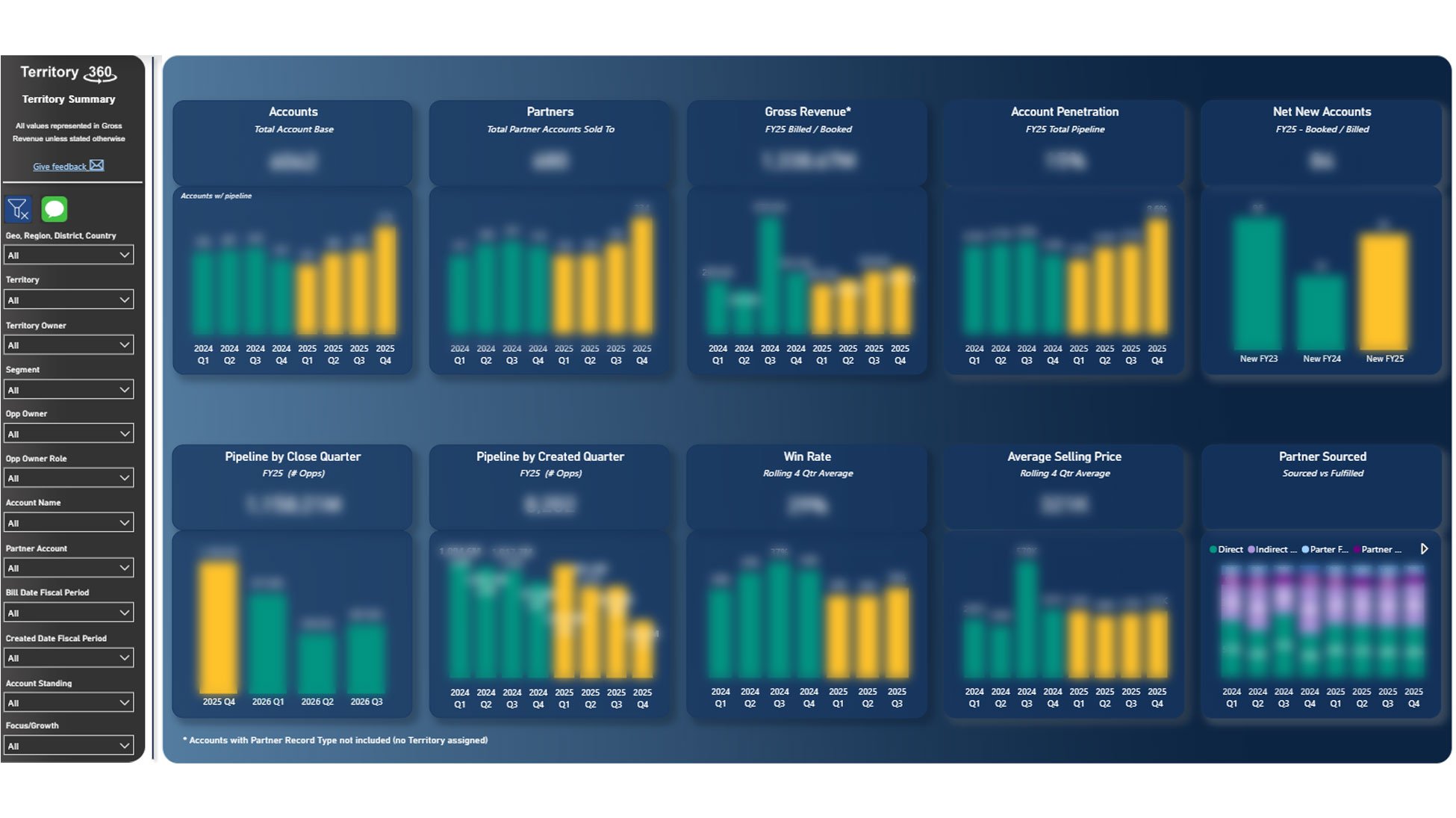
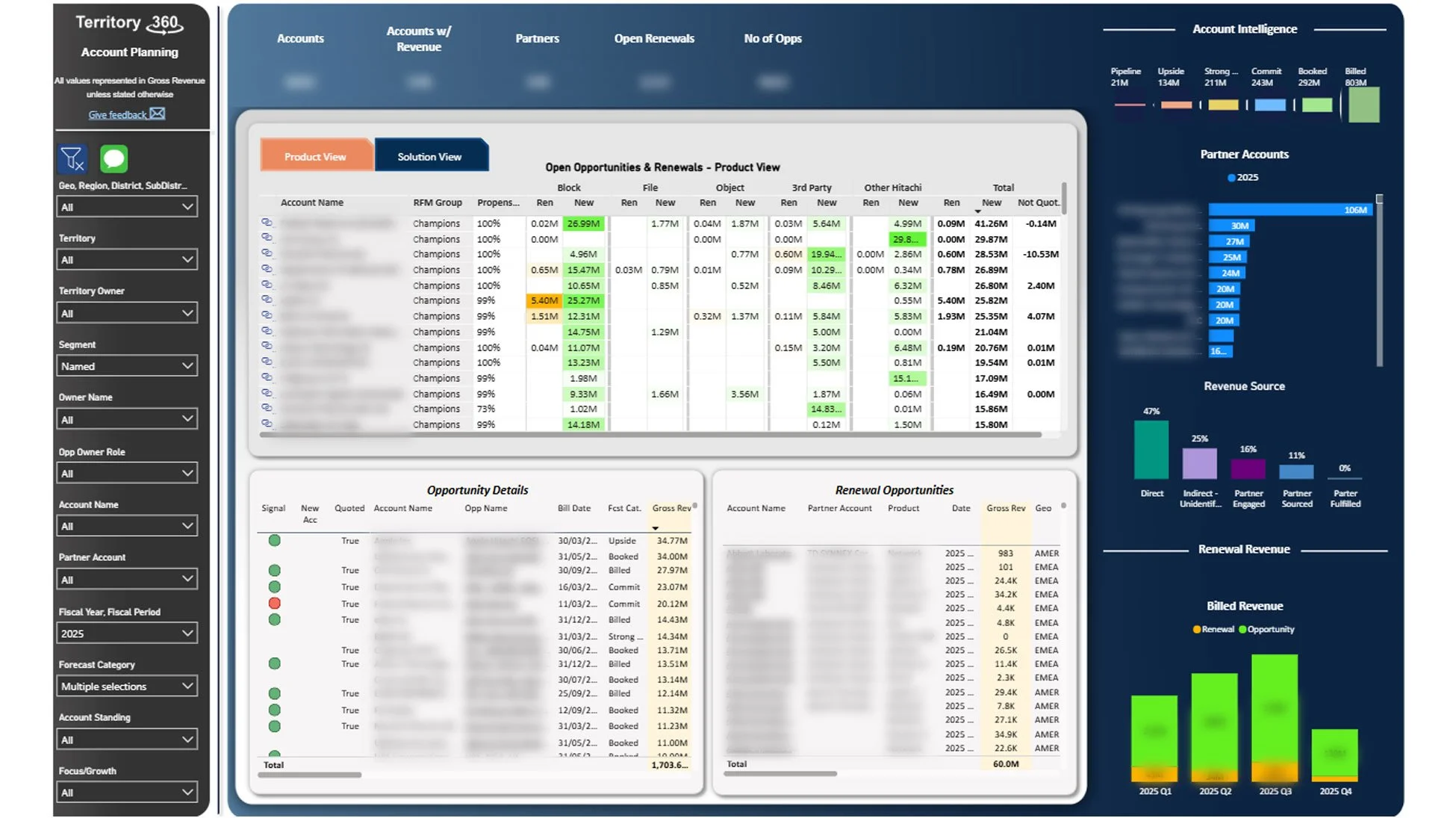
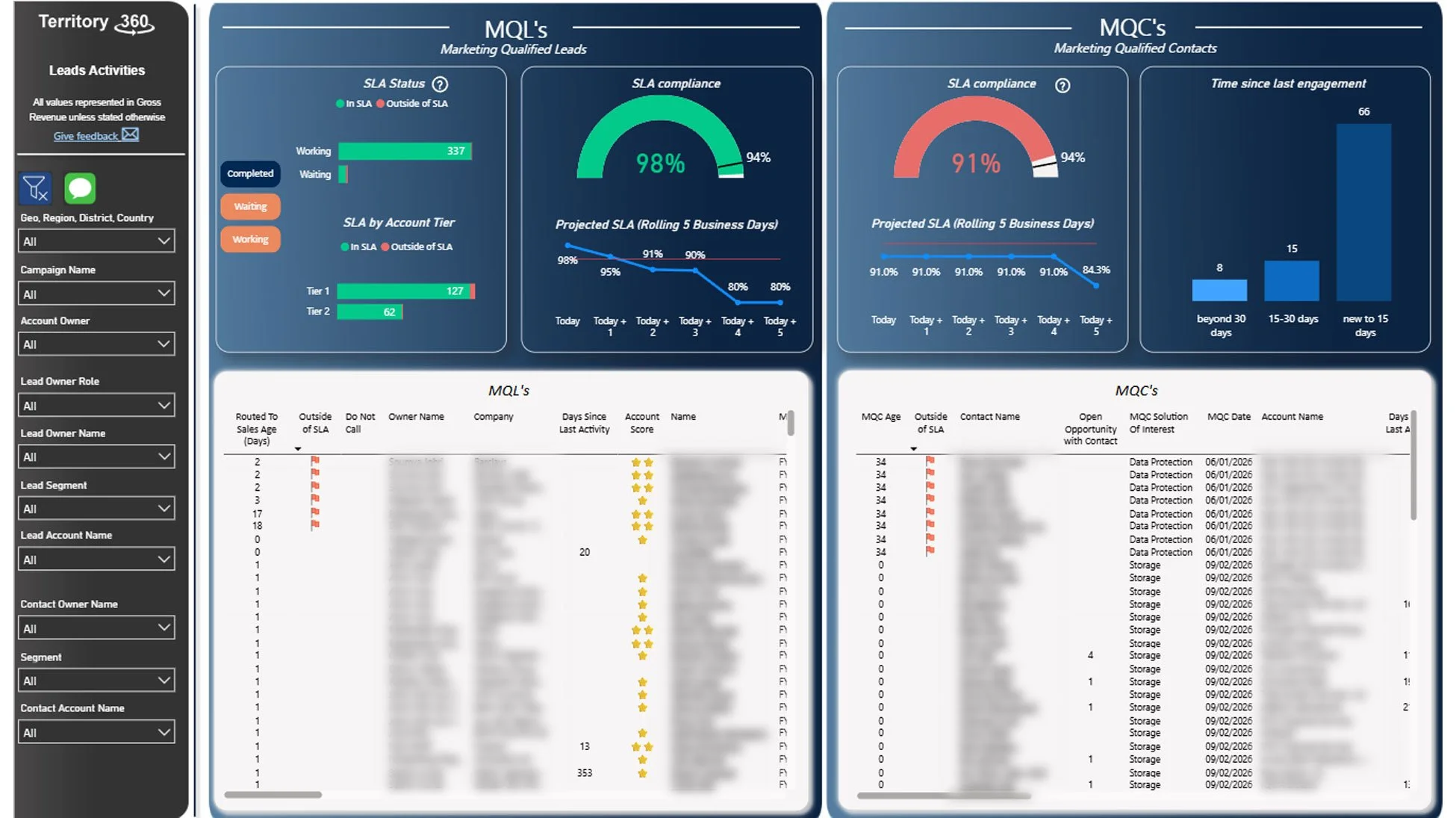
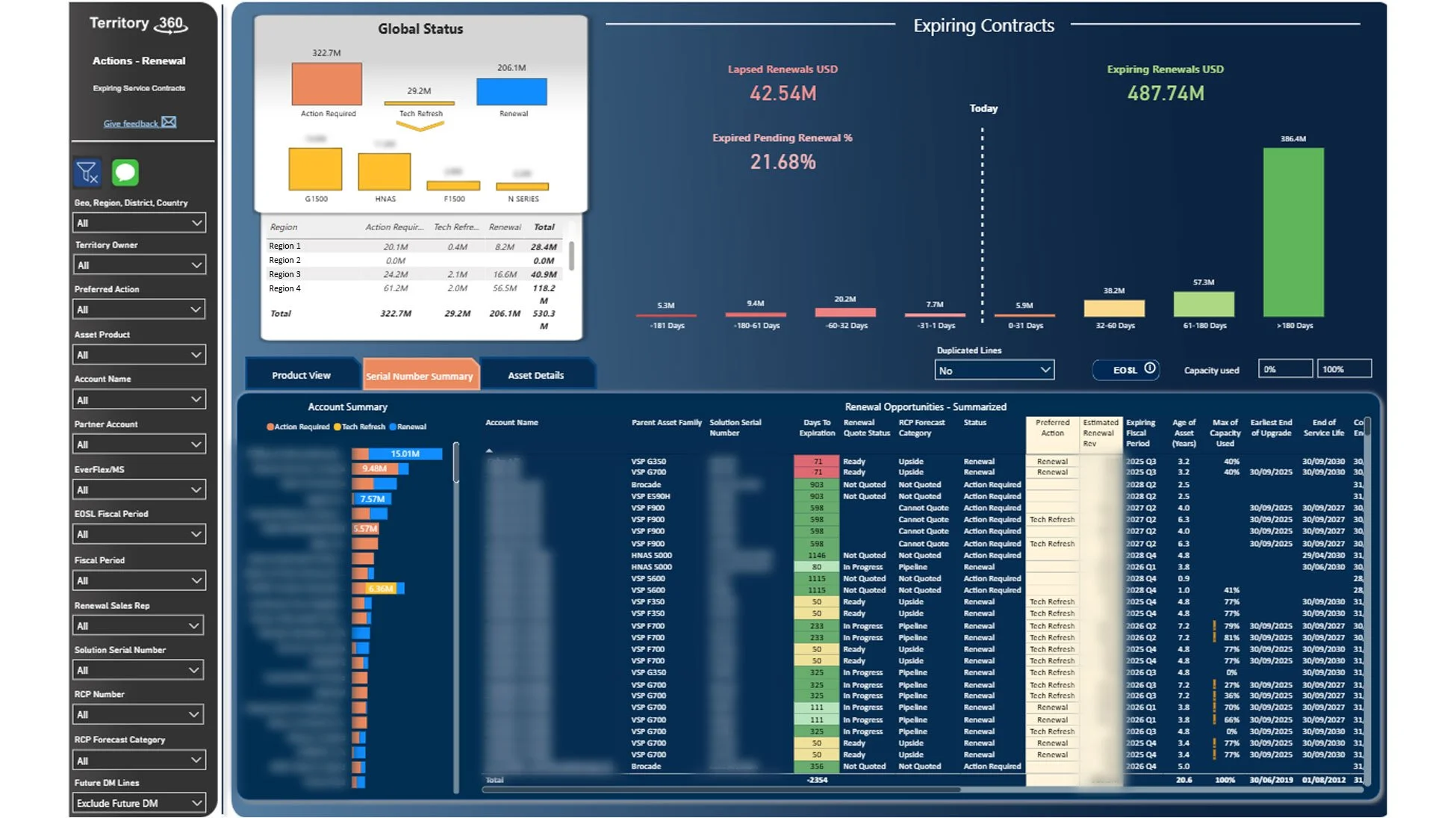
Territory 360 brings Sales, Partner, Renewal and Marketing data together in one place to help reps build better account plans and drive revenue growth.
It removes guesswork from selling.
Instead of asking reps to interpret raw data, it provides:
clear outstanding actions per account
renewal exposure
account risk
tech refresh opportunities
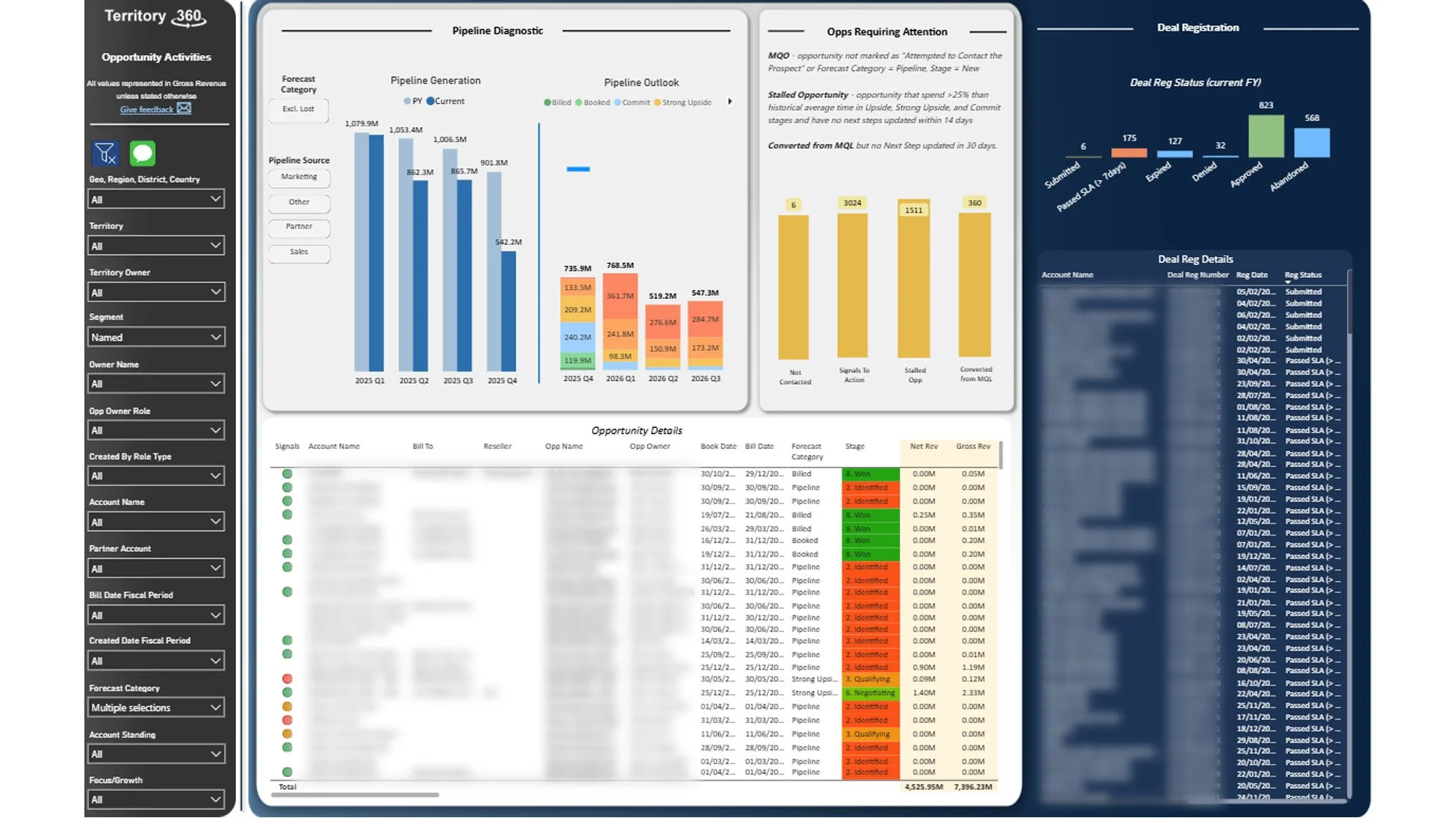
deal registrations requiring attention
The two most impactful areas in practice are:
Account Planning
Renewals Action view
These alone fundamentally changed how reps prioritize their time.
What Changed After Implementation
Once Territory 360 was rolled out, we saw immediate behavior change.
Reps were:
more proactive with customers
better prepared for account reviews
clearer on where to focus
spending less time searching for information
Commercially, the impact was tangible:
more new logos won
reduced customer churn
higher quality pipeline
a clearer path from renewals into tech refresh opportunities
The feedback from reps was consistent:
“All the data I need is finally in one place. I don’t have to fish for it anymore.”
The Bigger Vision
Territory 360 isn’t just about productivity.
It’s about keeping sales ahead of the game.
The real power is in understanding the customer footprint:
install base
utilization
renewal timelines
growth potential
For example, being able to see that a customer is approaching 100% storage utilisation allows reps to proactively engage — instead of waiting for the customer to raise the problem.
This aligns with my broader philosophy:
Data should improve customer conversations, not just internal reporting.
It should enable fact-based discussions, scenario planning and outcome-driven selling.
Longer term, the goal is for Territory 360 to become part of the DNA of how sales operates — embedded into onboarding and the default way every rep understands their territory.
Not another system.
Just the right one.